
One of the most common conversations we hear from leaders sounds something like this:
“We can’t find good people anymore.”
It’s usually said with frustration, sometimes with exhaustion, and often after a string of hires that didn’t work out the way everyone hoped they would. On the surface, it feels like a hiring problem. But when you look a little closer, it’s almost never just that.
The hard truth is this: great people exist, and they are out there working right now. The real challenge is not finding them. The challenge is building an environment that allows them to succeed once they arrive.
Over the years, we’ve watched high-potential people walk into organizations full of energy and intention. They want to contribute. They want to grow. They want to do meaningful work. And then, slowly, something shifts. Expectations become unclear. Decision-making feels inconsistent. Feedback is either absent or emotional instead of objective. The role they were hired for begins to look very different from the role they are actually performing.
Eventually, leaders start asking why the person “isn’t working out,” while the person quietly wonders why they feel set up to fail.
One client once said, “Our people weren’t underperforming. They were operating inside a system that couldn’t support the level they were capable of.” That single observation changed the entire way they looked at hiring and leadership.
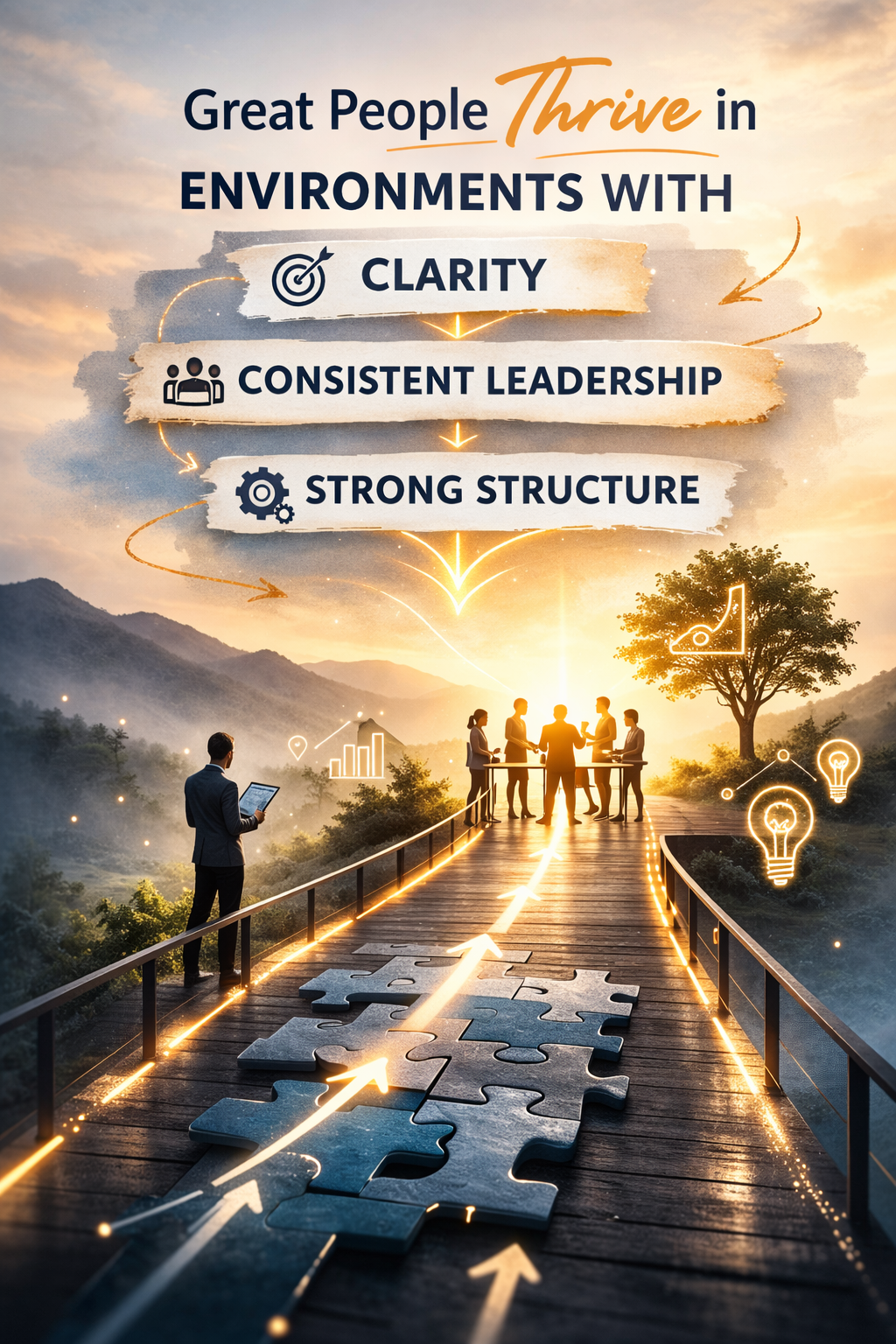
High-capacity people need more than opportunity. They need structure. They need clarity. They need leadership that understands how different people are wired to think, decide, and execute. Without that infrastructure, even the strongest talent will struggle, and when they do, the organization often mistakes misalignment for lack of ability.
Another leader reflected after a difficult turnover cycle, “We kept replacing people, but the same problems followed. That’s when we realized it wasn’t a people issue, it was a design issue.”
This is where many organizations get stuck. They invest heavily in recruiting but very little in role design, performance expectations, or understanding how someone is naturally built to operate. Hiring becomes reactive. Coaching becomes subjective. Growth becomes inconsistent.
Tools like performance and behavioral assessments can be helpful here, not as a hiring shortcut, but as a way to create shared language and understanding. When leaders understand how someone is wired to perform, they can design roles more intentionally, communicate more clearly, and lead with greater consistency. The result isn’t perfection, but it is alignment, and alignment changes everything.
Great people don’t need to be managed into submission. They need to be placed into environments where expectations are clear, leadership is consistent, and the structure around them supports the level of responsibility they are capable of carrying.
When that infrastructure exists, something interesting happens. Performance stabilizes. Trust increases. Turnover slows down. And leaders stop feeling like they are constantly starting over.
The conversation about talent shifts from “Why can’t we find good people?” to “How do we design an organization that great people want to stay in?”